Can You Stay in Your Home While the Roof Is Being Replaced?
Plan occupancy during roof replacement, including safe access, noise, dust, pets, working from home and situations needing alternative arrangements.
Home›Advice›Can You Stay in Your Home While the Roof Is Being Replaced?
New roofs
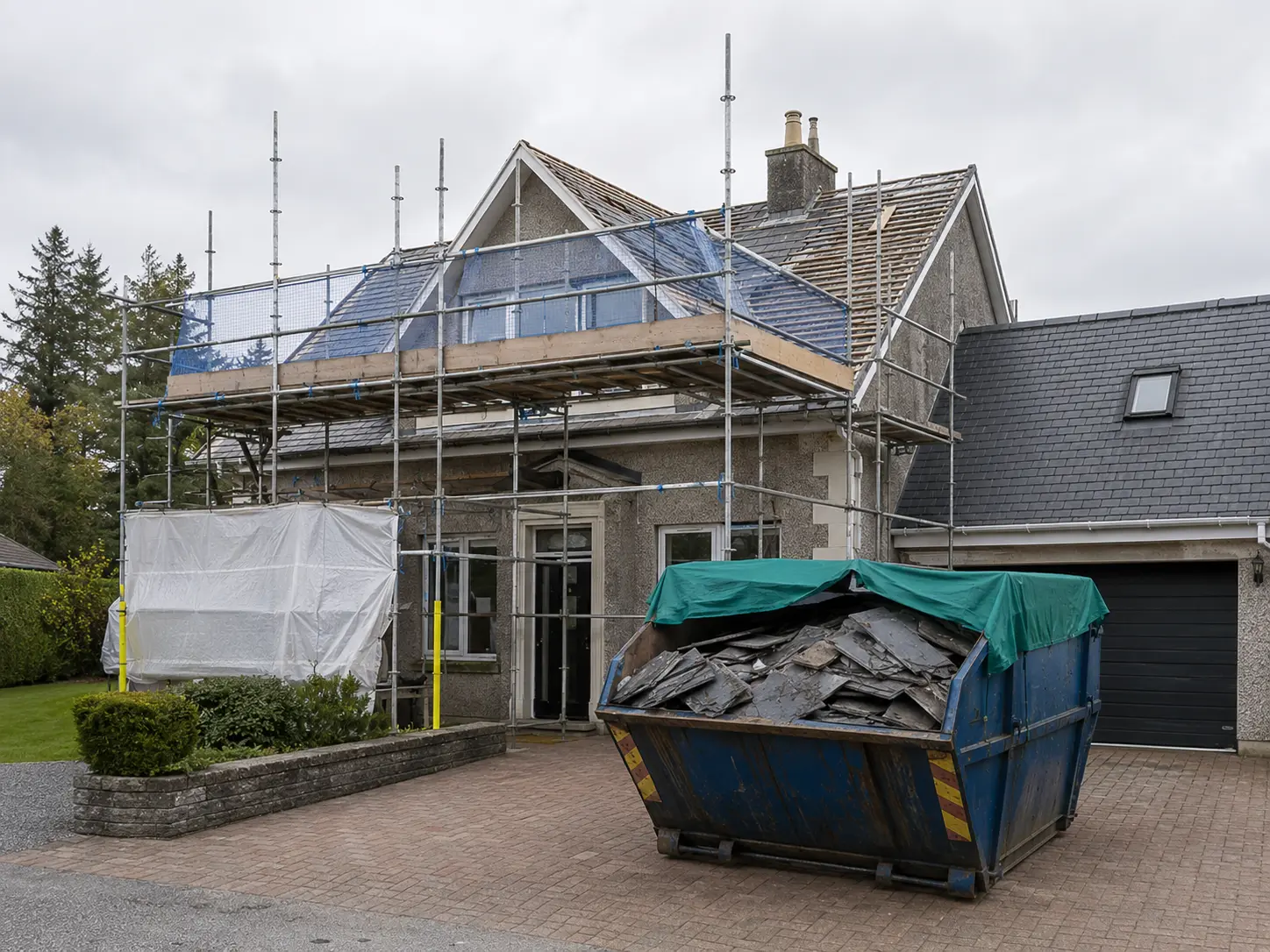
Illustrative image: safe routes need planning around access equipment and deliveries.
The short answer
You may be able to remain at home during external roof replacement, but it depends on the work and the contractor’s site plan. Agree safe entrances, any restricted rooms, weather protection and daily arrangements before starting. Major structural work or a lack of safe access can require different accommodation arrangements.
Start with what you can see from inside the property, ground level or a safe window. Do not climb onto the roof, lean out of a window or walk on a fragile covering. These steps give a roofer useful context without putting you at risk.
Explain who will be at home and any access or health needs.
Tell the contractor about children, pets and home working.
Identify the entrances and rooms you normally use.
Agree one contact for changes to the daily plan.
Agree occupancy for your particular project
A routine external covering replacement and work involving roof structure or internal ceilings create different conditions indoors. Ask the contractor whether occupied areas can remain safely separated from the work, and whether that assessment could change after opening-up.
Do not rely on a general assurance that people always stay home during roofing. The answer should identify which rooms and routes can be used, what protection is planned and what would trigger a temporary change. If alternatives may be needed, discuss them early enough to make practical arrangements.
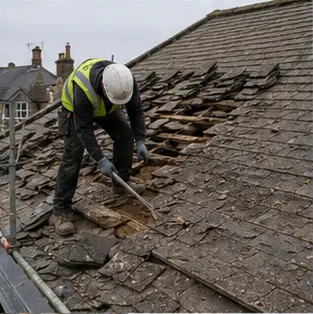
Illustrative image: stripping can be a disruptive stage for people at home.
Plan for noise, dust and interruptions
Stripping, fixing and moving materials can be disruptive even when the inside is not part of the work area. Tell the contractor if you need quiet for calls, sleep during the day or have equipment sensitive to dust and vibration. Ask which stages are likely to be most disruptive.
Move fragile items and agree how accessible loft belongings will be protected before work begins. Keep any room exclusions clear. The site plan should also explain whether utilities, ventilation equipment, aerials or other services could be affected and who will manage any necessary specialist work.
Illustrative image: agree when normal access and daily routines can resume.
HSE guidance identifies falling materials as a risk and calls for people to be kept away from areas below roof work. The contractor should explain how the entrance, paths and work zones will be managed; occupants should follow the agreed barriers and instructions.
Ask where deliveries will arrive, when a route may temporarily close and which alternative entrance to use. Do not step through a work area to save time or move barriers yourself. If there is no practical safe route for an occupant, resolve that before the relevant stage starts.
Make individual arrangements for children, pets and vulnerable occupants
Children and pets need a reliable boundary away from scaffolding, skips, tools and deliveries. Plan garden access and dog walks around the work zone, and tell visitors which entrance to use. Scaffold access must not become a play or viewing area.
For anyone with mobility restrictions or particular health needs, discuss the likely conditions in advance. Time away during the noisiest stages or alternative accommodation may be more comfortable or necessary, but that decision should reflect the actual work and individual requirements rather than a blanket rule for every household.
Agree daily updates and a change-of-plan contact
Ask for an update on the next day’s work, any changed access and the state in which the roof will be left overnight. Keep the site contact available to everyone responsible for the household. If an unexpected problem affects occupied rooms, you should know who decides the immediate next steps.
Before each day’s work ends, raise any new indoor water entry or other concerns promptly. At handover, confirm when normal access resumes and when equipment will leave. Remaining at home works best when the practical arrangements are explicit and can be revised as the job progresses.
Preparing for an inspection
Send the property postcode, a safe ground-level photograph and the history of the problem or planned work. Mention access restrictions, previous repairs and any shared parts of the building. Ask what can be established during the visit and what may remain uncertain until work begins.
Questions worth asking before you approve work
Which rooms and entrances can remain in use?
What would make temporary relocation necessary?
When will the noisiest work happen?
Who communicates changes to access or protection?
You should understand the recommended repair, how the roof will be reached and anything the quote does not include. Do not choose on price alone when two quotes cover different work.
Discuss your property with OnPoint RoofCare
For roofing enquiries in Motherwell, Lanarkshire, Glasgow and the surrounding service area, call with your postcode and a brief description of the work. We can discuss the appropriate next step and any further inspection or specialist input needed before a scope is agreed.
Talk to us about roof replacement
Send the property area and a safe ground-level photograph if you have one. We will review what you have noticed and contact you about the appropriate next step.