How safe access, weather protection, product limits and realistic scheduling affect a Scottish winter roof replacement.
Home›Advice›Can You Replace a Roof in Winter in Scotland?
New roofs
Winter work needs a controlled installation sequence
The short answer
A roof can be replaced during a Scottish winter when the job is planned around short daylight, wind, rain, frost and safe temporary protection. Work should pause when conditions make access, materials or weatherproofing unsafe. A rushed winter programme is a bigger risk than the season itself.
Start with what you can see from inside the property, ground level or a safe window. Do not climb onto the roof, lean out of a window or walk on a fragile covering. These steps give a roofer useful context without putting you at risk.
Ask how the roof will be kept weatherproof each day.
Confirm which weather conditions stop work or affect materials.
Keep loft belongings protected before stripping begins.
Agree how programme changes will be communicated.
Winter roofing depends on planning, not optimism
Scottish winter weather can change quickly. The contractor needs a realistic sequence for stripping controlled areas, installing temporary protection and making the roof secure before leaving site. Opening too much roof at once creates unnecessary exposure if rain arrives earlier than forecast.
Short daylight can reduce productive hours and strong wind may stop scaffold, lifting or sheet work. A sensible programme includes lost-weather time instead of promising an exact finish regardless of conditions.
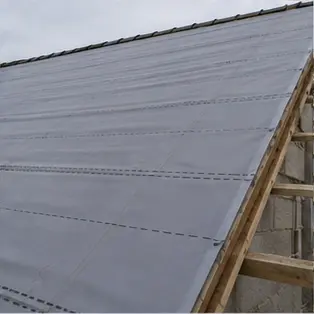
The secondary weather layer protects the roof build-up
Materials have weather limits
Membranes, tapes, adhesives, resins and coatings can have temperature, moisture and wind limits set by their manufacturers. Wet or frozen surfaces can prevent proper bonding. The roofer should follow the chosen system rather than treating every dry-looking hour as suitable.
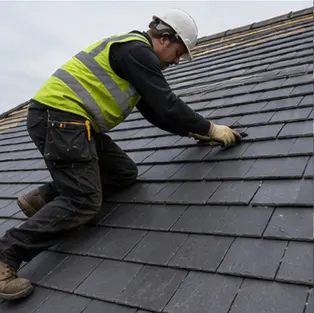
Slates and tiles can still be installed in cold weather when access and fixing remain safe, but ice, snow and frost make roof surfaces dangerous. HSE guidance is clear that all roof work must be organised and planned so it is carried out safely.
A safe finished roof matters more than a rushed date
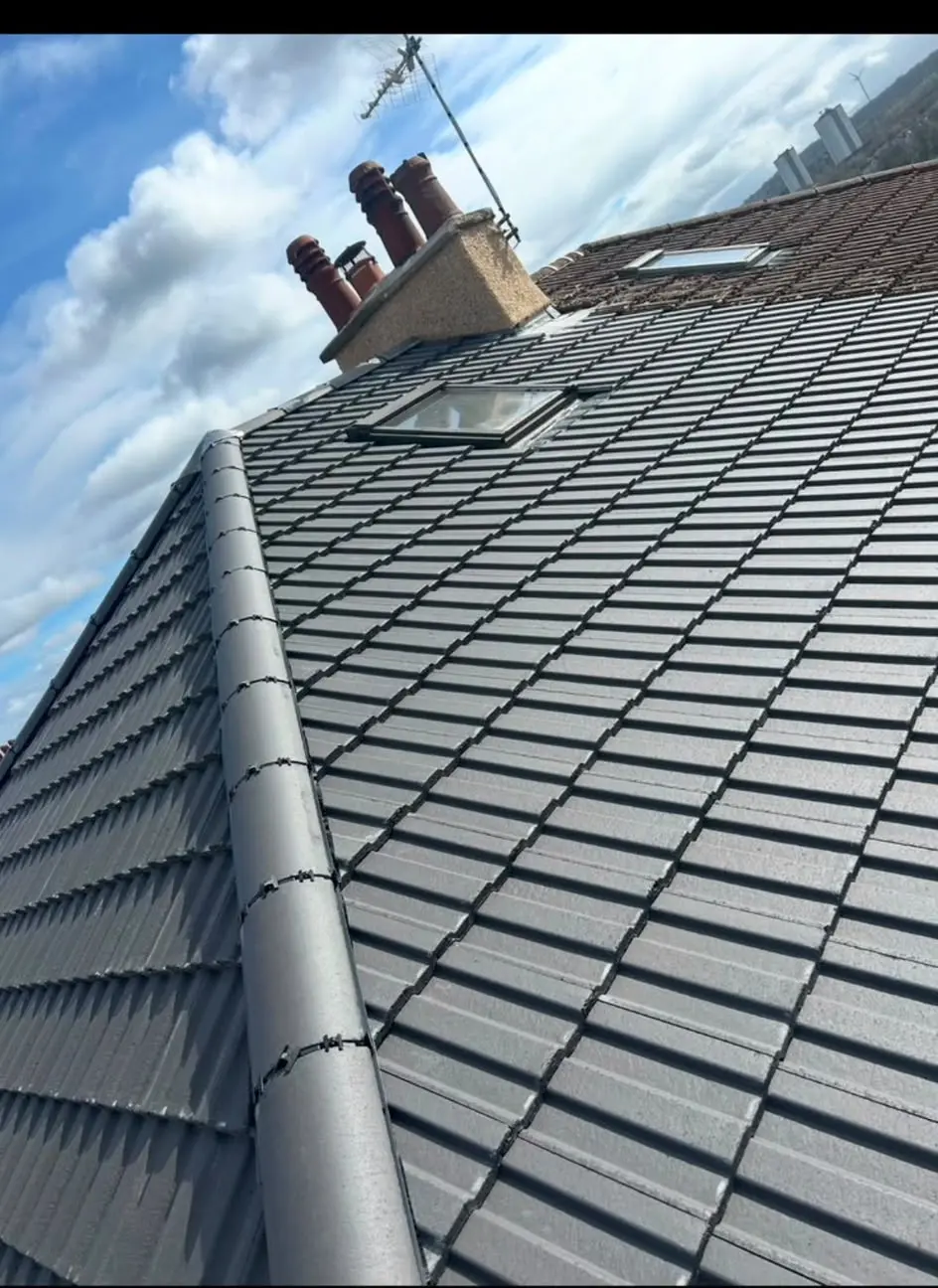
The old covering should be removed in controlled sections and the secondary weatherproof layer fitted promptly. Openings around chimneys, valleys and roof windows need particular attention because water can move quickly through unfinished joins.
Inside the loft, move valuable items away and cover stored belongings. Tell the roofer about tanks, electrics, fragile ceilings and any previous leak areas before work starts.
A planned replacement can sometimes wait for a more settled period when the existing roof remains safe and weatherproof. Active water entry, falling material or rapidly spreading damage may need temporary or permanent action sooner. The roof condition, not the calendar alone, should drive the decision.
Ask for an inspection, a written plan and a clear explanation of temporary protection. Never climb onto a frosted or wet roof to check progress yourself.
Preparing for a useful roof check
Give the roofer the property type, town or postcode, the first sign you noticed and when it happens. Mention previous repairs, roof windows, solar panels, chimneys, extensions and anything that may make the roof hard to reach. Photographs taken safely from the ground or inside can help with the first conversation, but they cannot show every layer or confirm the full price.
A good roof check makes clear what can and cannot be seen. Ask which parts of the roof were checked, whether any areas could not be seen and what may only become clear when work begins. This helps the quote clearly explain what is included.
Questions worth asking before you approve work
How much roof will be opened at one time?
What temporary protection will be available?
Which weather conditions stop the work?
Do the chosen products have temperature limits?
How will delays and extra protection be communicated?
You should understand the recommended repair, how the roof will be reached and anything the quote does not include. Do not choose on price alone when two quotes cover different work.
How OnPoint RoofCare can help
OnPoint RoofCare checks roofing problems across Motherwell, Lanarkshire, Glasgow and suitable parts of Central Scotland. Tell us what you have noticed and where the property is. We can then explain whether you are likely to need a repair, a maintenance visit or a wider discussion about replacement.
No online guide can find every hidden roof problem. This guide helps you act safely, ask useful questions and understand why the right answer depends on your roof.
Talk to us about roof replacement
Send the property area and a safe ground-level photograph if you have one. We will review what you have noticed and contact you about the appropriate next step.