How lead flashing, soakers, masonry, chimney pots and nearby roof coverings can each cause damp beside a chimney breast.
Home›Advice›Why Is Water Appearing Beside My Chimney?
Roof problems
Do not assume every chimney stain needs new lead or every dark patch comes through masonry. The whole chimney and roof junction needs assessed together.
The short answer
How lead flashing, soakers, masonry, chimney pots and nearby roof coverings can each cause damp beside a chimney breast. Do not assume every chimney stain needs new lead or every dark patch comes through masonry. The whole chimney and roof junction needs assessed together.
Start with what you can see from inside the property, ground level or a safe window. Do not climb onto the roof, lean out of a window or walk on a fragile covering. These steps give a roofer useful context without putting you at risk.
Start with this decision: Do not assume every chimney stain needs new lead or every dark patch comes through masonry. The whole chimney and roof junction needs assessed together.
Collect safe photographs, dates and any earlier roof paperwork.
Ask what was inspected, what remains hidden and which professional decision is still required.
Choose the next action from written evidence rather than pressure or a guessed online price.
Check the lead system
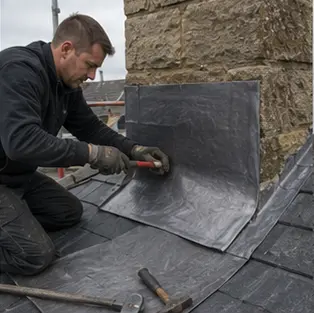
Aprons, stepped flashing and soakers direct water back onto the covering. Splits, lifting or short overlaps can allow rain into the joint. A roof symptom is a clue rather than a complete diagnosis. Water can travel through laps, underlay, insulation and timber before it becomes visible inside the property. In this case, the important question is whether the evidence supports a local action, wider investigation or no immediate roofing work. The answer should identify the relevant roof area and avoid promising what cannot be seen.
Record when the sign appears, the weather and the exact room or roof detail. Avoid climbing, lifting materials or applying sealant before the likely route and surrounding condition are checked. For check the lead system, ask for a practical next step, any safety or access limit and the documents you should retain. This makes the advice useful now and provides a record if the property, weather or work changes later.
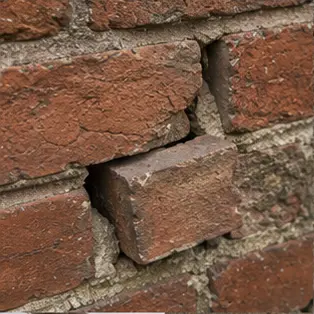
Open pointing, cracked render, pots, caps and unused flues can admit moisture independently of the roof covering. A roof symptom is a clue rather than a complete diagnosis. Water can travel through laps, underlay, insulation and timber before it becomes visible inside the property. In this case, the important question is whether the evidence supports a local action, wider investigation or no immediate roofing work. The answer should identify the relevant roof area and avoid promising what cannot be seen.
Record when the sign appears, the weather and the exact room or roof detail. Avoid climbing, lifting materials or applying sealant before the likely route and surrounding condition are checked. For check masonry and the top of the stack, ask for a practical next step, any safety or access limit and the documents you should retain. This makes the advice useful now and provides a record if the property, weather or work changes later.
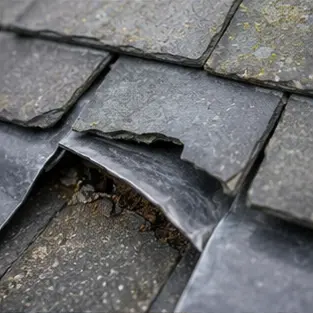
A slipped slate above the chimney can release water that appears beside the breast. Nearby valleys and roof windows may also alter the path. A roof symptom is a clue rather than a complete diagnosis. Water can travel through laps, underlay, insulation and timber before it becomes visible inside the property. In this case, the important question is whether the evidence supports a local action, wider investigation or no immediate roofing work. The answer should identify the relevant roof area and avoid promising what cannot be seen.
Record when the sign appears, the weather and the exact room or roof detail. Avoid climbing, lifting materials or applying sealant before the likely route and surrounding condition are checked. For check the surrounding slates or tiles, ask for a practical next step, any safety or access limit and the documents you should retain. This makes the advice useful now and provides a record if the property, weather or work changes later.
Unused cold chimneys can develop condensation. Timing, ventilation and weather evidence help the roofer and any chimney specialist choose the right investigation. A roof symptom is a clue rather than a complete diagnosis. Water can travel through laps, underlay, insulation and timber before it becomes visible inside the property. In this case, the important question is whether the evidence supports a local action, wider investigation or no immediate roofing work. The answer should identify the relevant roof area and avoid promising what cannot be seen.
Record when the sign appears, the weather and the exact room or roof detail. Avoid climbing, lifting materials or applying sealant before the likely route and surrounding condition are checked. For separate rain entry from internal moisture, ask for a practical next step, any safety or access limit and the documents you should retain. Finish by checking that the proposed action connects to the original problem and that the quotation does not quietly omit the difficult part of the work.
Preparing for a useful roof check
Give the roofer the property type, town or postcode, the first sign you noticed and when it happens. Mention previous repairs, roof windows, solar panels, chimneys, extensions and anything that may make the roof hard to reach. Photographs taken safely from the ground or inside can help with the first conversation, but they cannot show every layer or confirm the full price.
A good roof check makes clear what can and cannot be seen. Ask which parts of the roof were checked, whether any areas could not be seen and what may only become clear when work begins. This helps the quote clearly explain what is included.
Questions worth asking before you approve work
What evidence or document confirms: check the lead system?
What evidence or document confirms: check masonry and the top of the stack?
What evidence or document confirms: check the surrounding slates or tiles?
What evidence or document confirms: separate rain entry from internal moisture?
What is the safest useful next step for this property?
You should understand the recommended repair, how the roof will be reached and anything the quote does not include. Do not choose on price alone when two quotes cover different work.
How OnPoint RoofCare can help
OnPoint RoofCare checks roofing problems across Motherwell, Lanarkshire, Glasgow and suitable parts of Central Scotland. Tell us what you have noticed and where the property is. We can then explain whether you are likely to need a repair, a maintenance visit or a wider discussion about replacement.
No online guide can find every hidden roof problem. This guide helps you act safely, ask useful questions and understand why the right answer depends on your roof.
Talk to us about chimney repairs and leadwork
Send the property area and a safe ground-level photograph if you have one. We will review what you have noticed and contact you about the appropriate next step.