Compare retaining and capping an unused chimney with removal, including ventilation, condition, shared flues and permissions in Scotland.
Home›Advice›Should an Unused Chimney Be Capped or Removed?
Roof problems
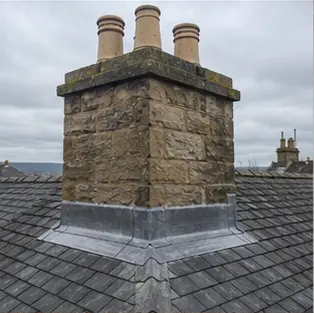
Illustrative image: retaining a chimney means maintaining the stack and its roof junction.
The short answer
A sound, genuinely unused chimney may be retained with suitable weather protection and ventilation. Removal is a larger alteration that needs a clear reason, investigation of the structure and checks on ownership and permissions. Confirm every flue’s use before choosing either option.
Start with what you can see from inside the property, ground level or a safe window. Do not climb onto the roof, lean out of a window or walk on a fragile covering. These steps give a roofer useful context without putting you at risk.
Check property records for fireplaces, appliances and previous chimney alterations.
Tell the inspector if the stack is shared with another property.
Photograph visible damage from ground level.
Keep unused fireplaces and existing vents accessible for inspection.
First establish what each flue serves
A blocked-up fireplace does not prove that the whole chimney is redundant. One stack may contain several flues, and a neighbouring home or another room may still use one. Draw up a simple list of fireplaces and appliances and have the connections checked by an appropriately qualified person.
Do not close a flue that could serve a working appliance. If use is uncertain, resolve that question before roofing work begins. A roofing inspection of the outside cannot on its own establish whether a concealed appliance connection is safe to block.
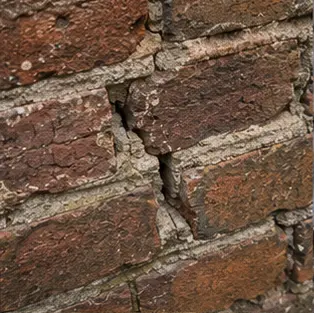
Illustrative image: a cap does not repair failing mortar.
When retaining and capping can make sense
Retention is worth considering where the stack is sound, the roof junction is serviceable and you want to keep the building’s appearance or future options. The specification should describe how rain will be excluded while the disused flue remains ventilated.
Historic England’s guidance explains the need for ventilation at the top and bottom of a disused flue when it is closed off. This is conservation guidance, not a substitute for Scottish permissions or an assessment of your chimney. Ask the contractor to show where the ventilation will remain and how it will be maintained.
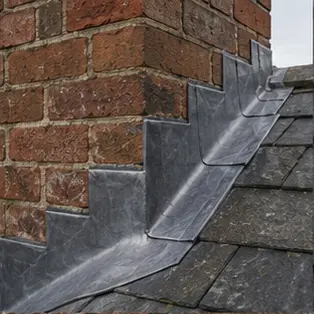
Capping addresses the opening; it does not renew missing pointing, stabilise loose bricks or fix a leaking roof junction. If the reason for the enquiry is damp, ask for a diagnosis covering the whole chimney before assuming a cap will solve it.
Compare the cost and scope of retaining the stack in sound condition, including access and future maintenance. A quote for a cap alone is not directly comparable with a quote to repair the masonry and leadwork. The difference should be explicit so you can judge the complete option.
Ask whether the proposal removes only the exposed stack or also any chimney breast below. These are materially different projects. The assessment must establish what is supported by the remaining structure and how the roof opening would be rebuilt and made weatherproof.
Before committing, check requirements with the local planning and building standards teams, and resolve any shared ownership. Historic Environment Scotland explains that alterations affecting the character of a listed building may require listed building consent. Do not assume that an unused chimney can be removed without checking.
Request two clearly scoped options where both are feasible: retention with the necessary repairs and ventilated weather protection, and removal with all associated structural and roof work. Include access, waste, matching roof coverings, internal making good and any professional design or consent work.
Then consider appearance, disruption, future fireplace plans and ongoing maintenance alongside price. Ask what evidence supports the recommendation and what remains uncertain. OnPoint can discuss the visible roofing elements; specialist flue, structural or consent questions need the appropriate professional input before the final scope is agreed.
Preparing for an inspection
Send the property postcode, a safe ground-level photograph and the history of the problem or planned work. Mention access restrictions, previous repairs and any shared parts of the building. Ask what can be established during the visit and what may remain uncertain until work begins.
Questions worth asking before you approve work
Has every flue’s use been confirmed?
How will a retained unused flue be ventilated?
What exactly would be removed?
Who checks permissions, ownership and structural implications?
You should understand the recommended repair, how the roof will be reached and anything the quote does not include. Do not choose on price alone when two quotes cover different work.
Discuss your property with OnPoint RoofCare
For roofing enquiries in Motherwell, Lanarkshire, Glasgow and the surrounding service area, call with your postcode and a brief description of the work. We can discuss the appropriate next step and any further inspection or specialist input needed before a scope is agreed.
Talk to us about chimney capping and cowls
Send the property area and a safe ground-level photograph if you have one. We will review what you have noticed and contact you about the appropriate next step.