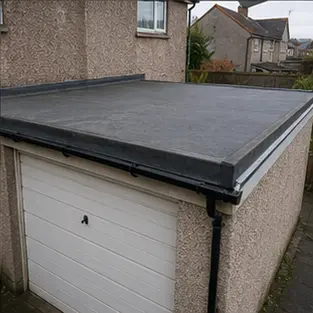
Felt, EPDM and GRP can all be suitable when the roof is designed and installed for that system. The best choice depends on deck condition, roof fall, size, outlets, raised wall edges, foot traffic and adjoining walls or pitched roofs. A named material alone does not guarantee a sound flat roof.
Start with what you can see from inside the property, ground level or a safe window. Do not climb onto the roof, lean out of a window or walk on a fragile covering. These steps give a roofer useful context without putting you at risk.
Find out whether the existing deck is sound, wet or uneven.
Check where rainwater should flow and whether water currently ponds.
List every edge, outlet, wall join, pipe and rooflight that needs detailing.
Compare complete work details rather than headline material prices.
High-performance roofing felt
Modern built-up felt systems are very different from a thin shed-felt repair. They normally use suitable layers bonded to a prepared deck, with reinforced details at edges, outlets and raised wall edges. Mineral finishes can provide a familiar appearance and the system can be formed around many domestic roof shapes.
Heat-applied work requires careful fire safety and competent installation. Some systems or locations may use self-adhesive or cold-applied components. Ask how the chosen system will be installed at the property and how vulnerable joins will be protected.
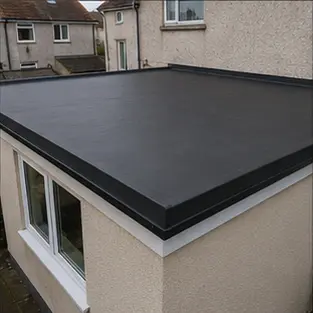
EPDM is a flexible synthetic rubber waterproof covering often supplied in large sheets, reducing the number of field seams on a small domestic roof. It is bonded to a suitable clean deck and finished with suitable tapes, trims and outlet details. Good preparation is essential because bumps and trapped moisture beneath the sheet can cause problems.
The waterproof covering must be detailed carefully where it meets walls, pipes, rooflights and adjoining coverings. Edge trims and adhesives should form part of one suitable system. The appearance is usually smooth and dark, which suits many extensions and garages.
GRP fibreglass surface and edge detail
Need help with flat roofing?See what the service covers and tell us about your property.View flat roofing options →
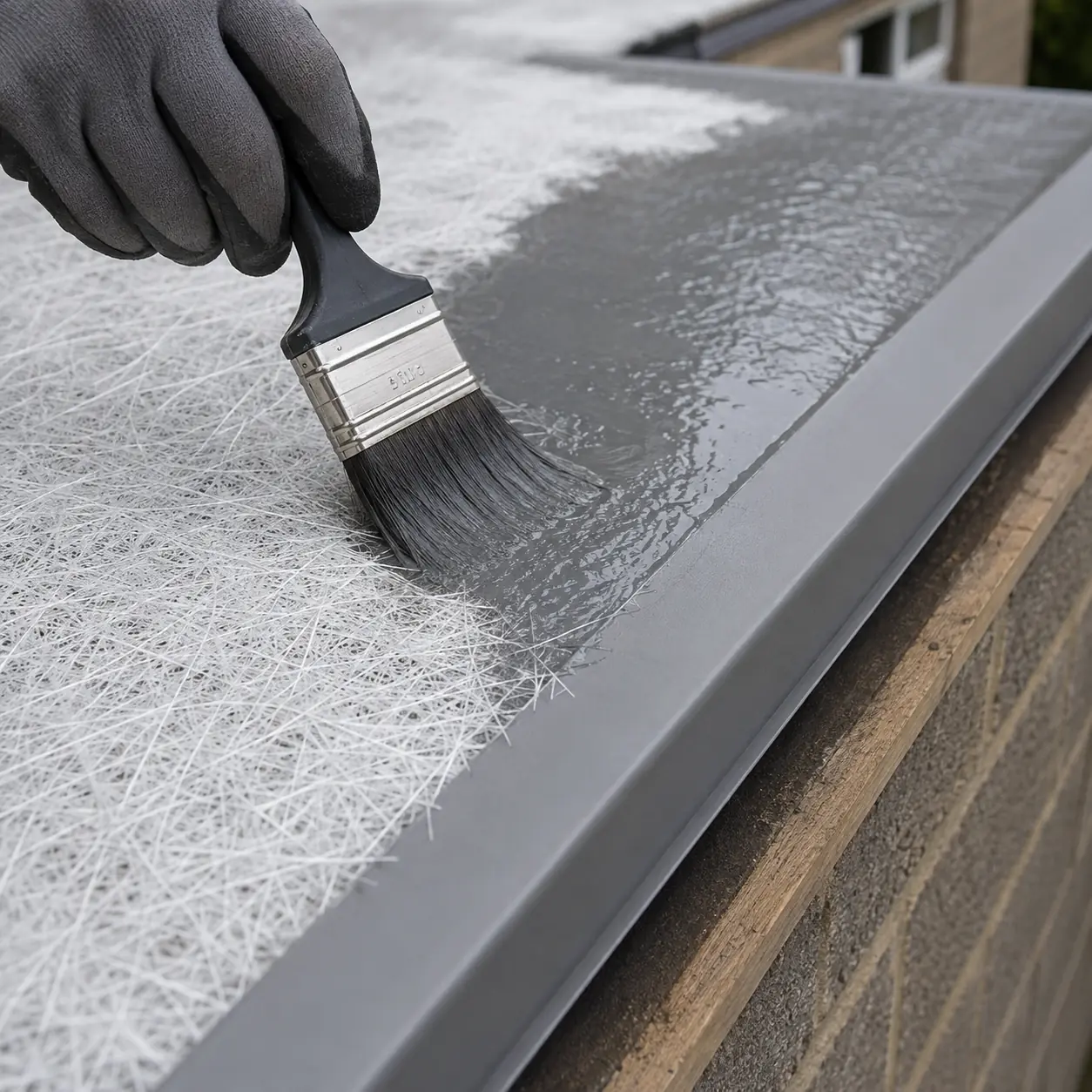
GRP uses resin and glass reinforcement to create a rigid seamless surface over a suitable deck. It can form crisp edges and is often chosen where a clean, firm finish is wanted. Weather and temperature during installation matter because resin curing must be controlled.
Movement, deck joints and complex details need proper treatment. GRP is not simply paint spread over an old roof. The deck preparation, reinforcement, resin ratio and topcoat all affect the result, so the full installation method should be described.
Falls, outlets and edges decide whether water escapes
A waterproof surface cannot perform well if water has nowhere sensible to go. Flat roofs should have a designed fall towards a gutter or outlet, even though the slope may be hard to see. Low spots can leave water standing and increase stress at laps and details.
Raised wall edges at walls, outer edges and the join with a pitched roof are common weak points. Before choosing a material, ask how these details will be formed and how any wet or damaged deck will be handled. The answer is often more important than the product name.
Preparing for a useful roof check
Give the roofer the property type, town or postcode, the first sign you noticed and when it happens. Mention previous repairs, roof windows, solar panels, chimneys, extensions and anything that may make the roof hard to reach. Photographs taken safely from the ground or inside can help with the first conversation, but they cannot show every layer or confirm the full price.
A good roof check makes clear what can and cannot be seen. Ask which parts of the roof were checked, whether any areas could not be seen and what may only become clear when work begins. This helps the quote clearly explain what is included.
Questions worth asking before you approve work
Will the existing covering and deck be removed or overlaid?
How will the falls and drainage be checked?
What system will be used at walls, outlets and rooflights?
How will the work be protected from unsuitable weather during installation?
What happens if wet or damaged deck material is uncovered?
You should understand the recommended repair, how the roof will be reached and anything the quote does not include. Do not choose on price alone when two quotes cover different work.
How OnPoint RoofCare can help
OnPoint RoofCare checks roofing problems across Motherwell, Lanarkshire, Glasgow and suitable parts of Central Scotland. Tell us what you have noticed and where the property is. We can then explain whether you are likely to need a repair, a maintenance visit or a wider discussion about replacement.
No online guide can find every hidden roof problem. This guide helps you act safely, ask useful questions and understand why the right answer depends on your roof.
Talk to us about flat roofing
Send the property area and a safe ground-level photograph if you have one. We will review what you have noticed and contact you about the appropriate next step.