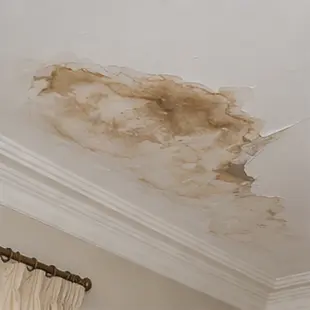
Protect people first, contain water only if it is safe, move valuables away and arrange a roof check. Do not climb onto the roof or enter a wet loft near electrics. A ceiling stain does not prove that the fault is directly above it, so record what you see and the weather when it happened.
Start with what you can see from inside the property, ground level or a safe window. Do not climb onto the roof, lean out of a window or walk on a fragile covering. These steps give a roofer useful context without putting you at risk.
Keep people, pets and electrical items away from the wet area.
Place a container beneath drips only when the floor and ceiling remain safe.
Take indoor photographs and a ground-level exterior photo without climbing.
Contact a roofer with the property location, when the leak started and what the weather was doing.
Make the room safe before thinking about the roof
Water and electricity are a dangerous combination. If water is close to a light fitting, socket or electrical appliance, keep clear and seek appropriate electrical advice. Do not touch wet fittings. A badly bulging ceiling may be holding water and damaged plaster, so keep people out of the area beneath it.
If a container can be placed safely, it may reduce damage to flooring. Towels can help with small splashes, but avoid standing on furniture or creating another hazard. Your first job is not to find the roof problem yourself; it is to limit avoidable harm until someone can assess the source.
Note the time, wind direction and type of rain. A leak that appears only in driving wind may point to a different detail from one that occurs during every shower. Photograph the stain before it dries and mark its edge lightly with a pencil if doing so will not damage the finish. This shows whether the area grows.
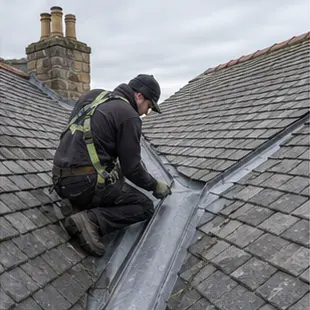
From ground level, look for displaced slates, cracked tiles, loose ridge material or overflowing gutters. An upstairs window may provide a safe view, but do not lean out. Tell the roofer about chimneys, roof windows, valleys or flat-roof joins near the damaged area because these details can guide the inspection.
Rain can enter through the covering, run along underlay, follow a timber and finally drip at a joint in the ceiling. Insulation can also absorb and spread moisture. This is why sealing the point directly above an indoor mark may fail to solve the problem.
The roof should be checked around the likely water path, including higher areas and nearby joins. In some cases, materials need to be lifted to see the condition beneath. A responsible roofer will explain the limits of a visual inspection and avoid claiming certainty where the source is hidden.
What happens after the immediate leak is controlled
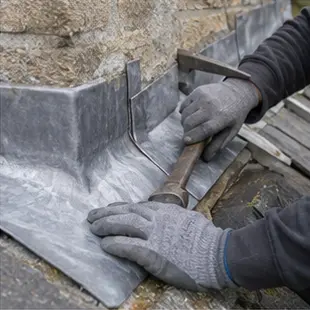
The next step is to agree whether a local repair is suitable and whether any wet materials need time to dry. Replacing a slate or repairing flashing may stop further entry, but internal decoration should not be rushed while moisture remains in the roof space or ceiling.
Ask for the repair details in plain language. It should identify the roof area, the intended work and any assumptions about hidden damage. If the covering is widely deteriorated, the roofer should explain why a broader option may provide better value rather than simply adding patches.
Preparing for a useful roof check
Give the roofer the property type, town or postcode, the first sign you noticed and when it happens. Mention previous repairs, roof windows, solar panels, chimneys, extensions and anything that may make the roof hard to reach. Photographs taken safely from the ground or inside can help with the first conversation, but they cannot show every layer or confirm the full price.
A good roof check makes clear what can and cannot be seen. Ask which parts of the roof were checked, whether any areas could not be seen and what may only become clear when work begins. This helps the quote clearly explain what is included.
Questions worth asking before you approve work
Can you identify the likely entry area and not just the ceiling stain?
Is a temporary weatherproofing measure needed?
What surrounding roof details will be checked?
Could wet insulation or timber need further attention?
When is it sensible to redecorate the damaged room?
You should understand the recommended repair, how the roof will be reached and anything the quote does not include. Do not choose on price alone when two quotes cover different work.
How OnPoint RoofCare can help
OnPoint RoofCare checks roofing problems across Motherwell, Lanarkshire, Glasgow and suitable parts of Central Scotland. Tell us what you have noticed and where the property is. We can then explain whether you are likely to need a repair, a maintenance visit or a wider discussion about replacement.
No online guide can find every hidden roof problem. This guide helps you act safely, ask useful questions and understand why the right answer depends on your roof.
Talk to us about emergency roof repairs
Send the property area and a safe ground-level photograph if you have one. We will review what you have noticed and contact you about the appropriate next step.