If roof damage may lead to an insurance claim, make the property safe, record what happened and contact the insurer before committing to non-urgent permanent work. A roofer can inspect visible damage, provide photographs and quote for an agreed repair, but the insurer decides what information, cover and authorisation apply.
Start with what you can see from inside the property, ground level or a safe window. Do not climb onto the roof, lean out of a window or walk on a fragile covering. These steps give a roofer useful context without putting you at risk.
Keep people away from falling material, wet electrics and unsafe ceilings.
Photograph indoor damage and the roof only from a safe position.
Write down when the damage appeared and the weather at the time.
Contact the insurer and ask what information or approval they require.
Arrange a roof check and retain reports, quotes and invoices.
Make the property safe and limit further damage
Safety comes first. Keep clear of loose roof material and do not enter a wet loft where electrical equipment may be damaged. Move belongings away from drips only when this can be done safely. Never climb onto the roof to gather information.
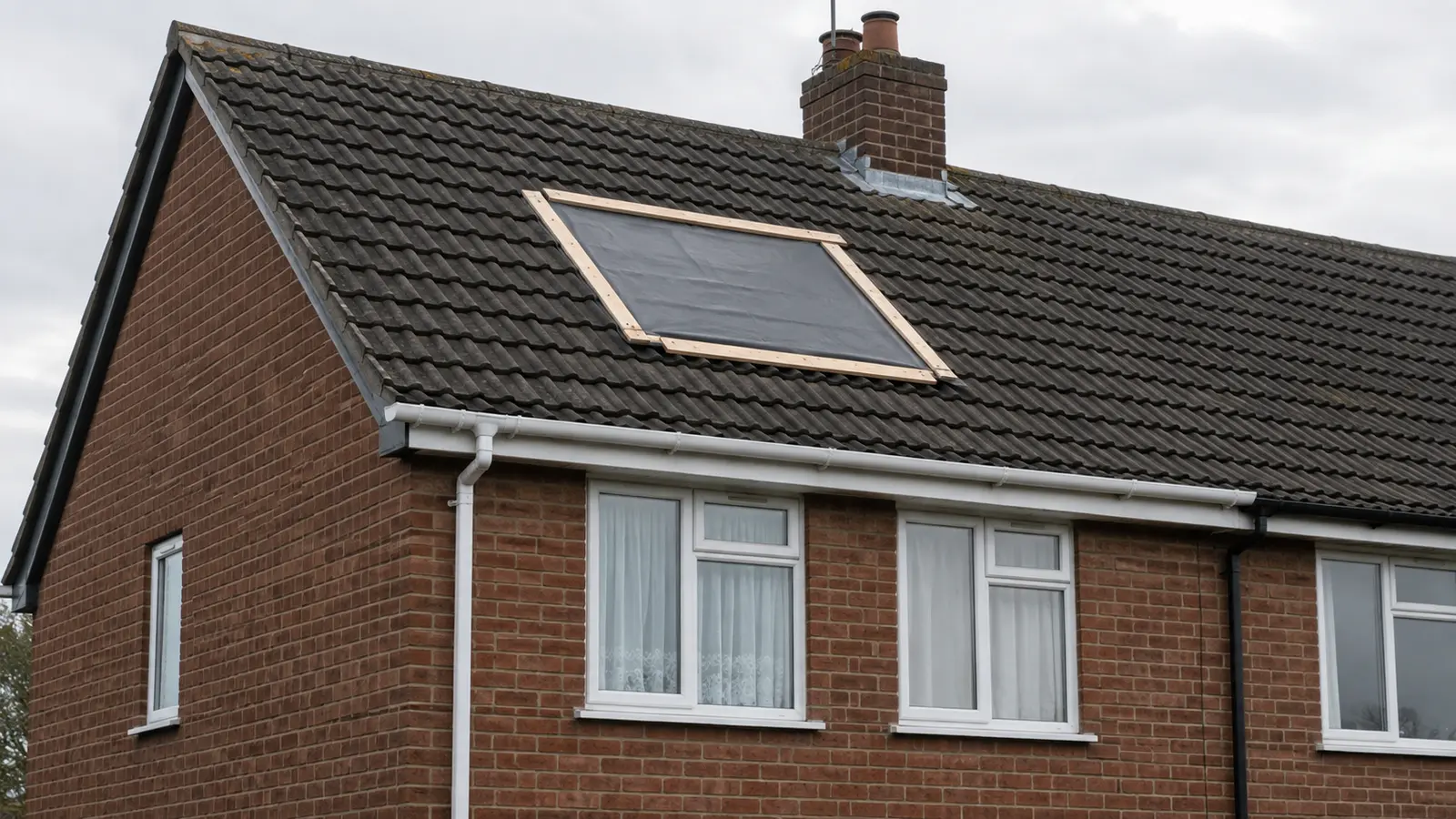
Temporary weather protection may sometimes be appropriate, but wind, rain, height and roof condition can make access unsafe. Tell the insurer if urgent work is needed and keep a clear record of any temporary action taken.
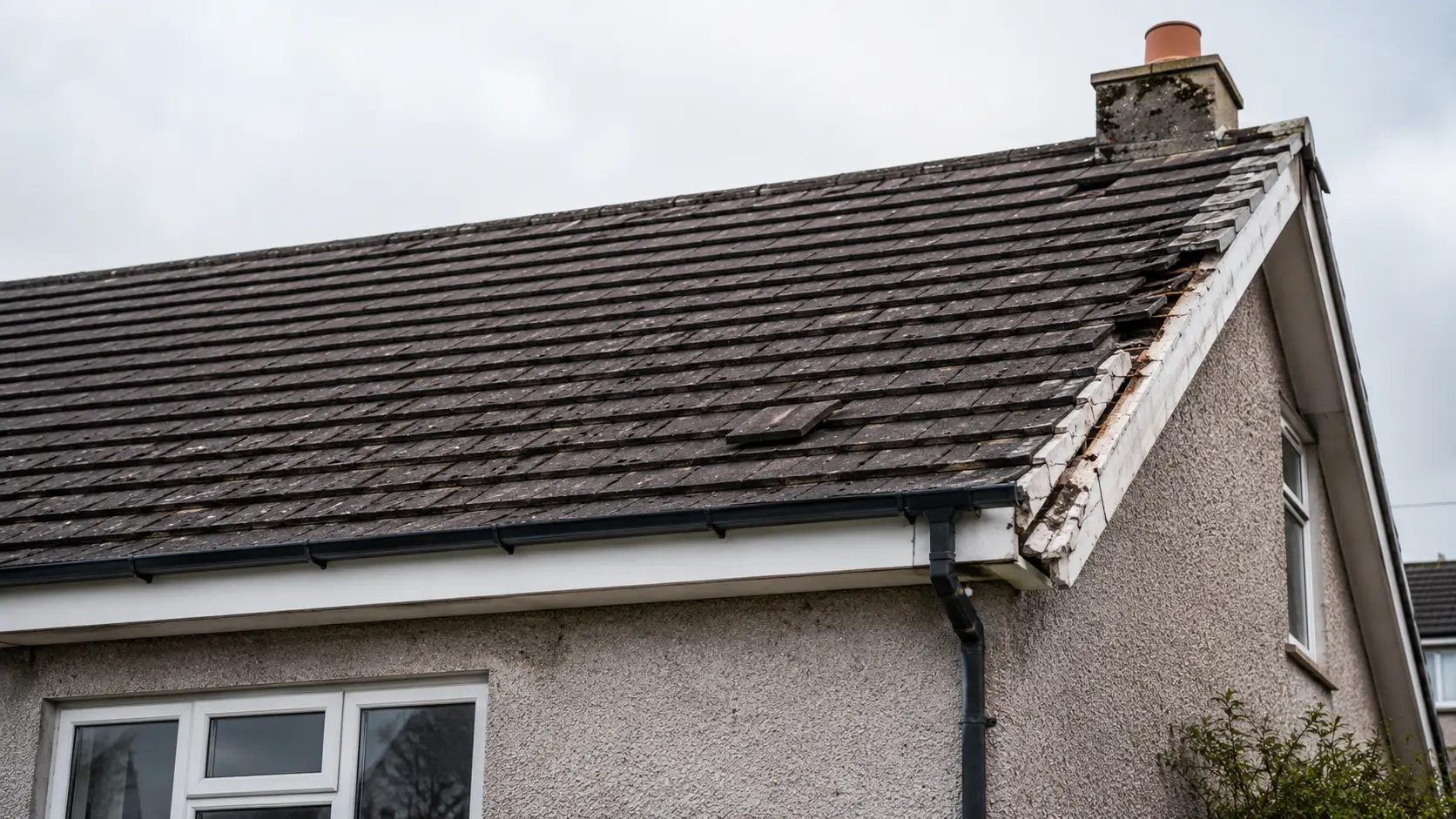
Take dated photographs of ceiling marks, fallen material and visible exterior damage from ground level or a safe window. Note when the problem started, whether it followed a named storm or strong wind, and whether the roof had leaked before.
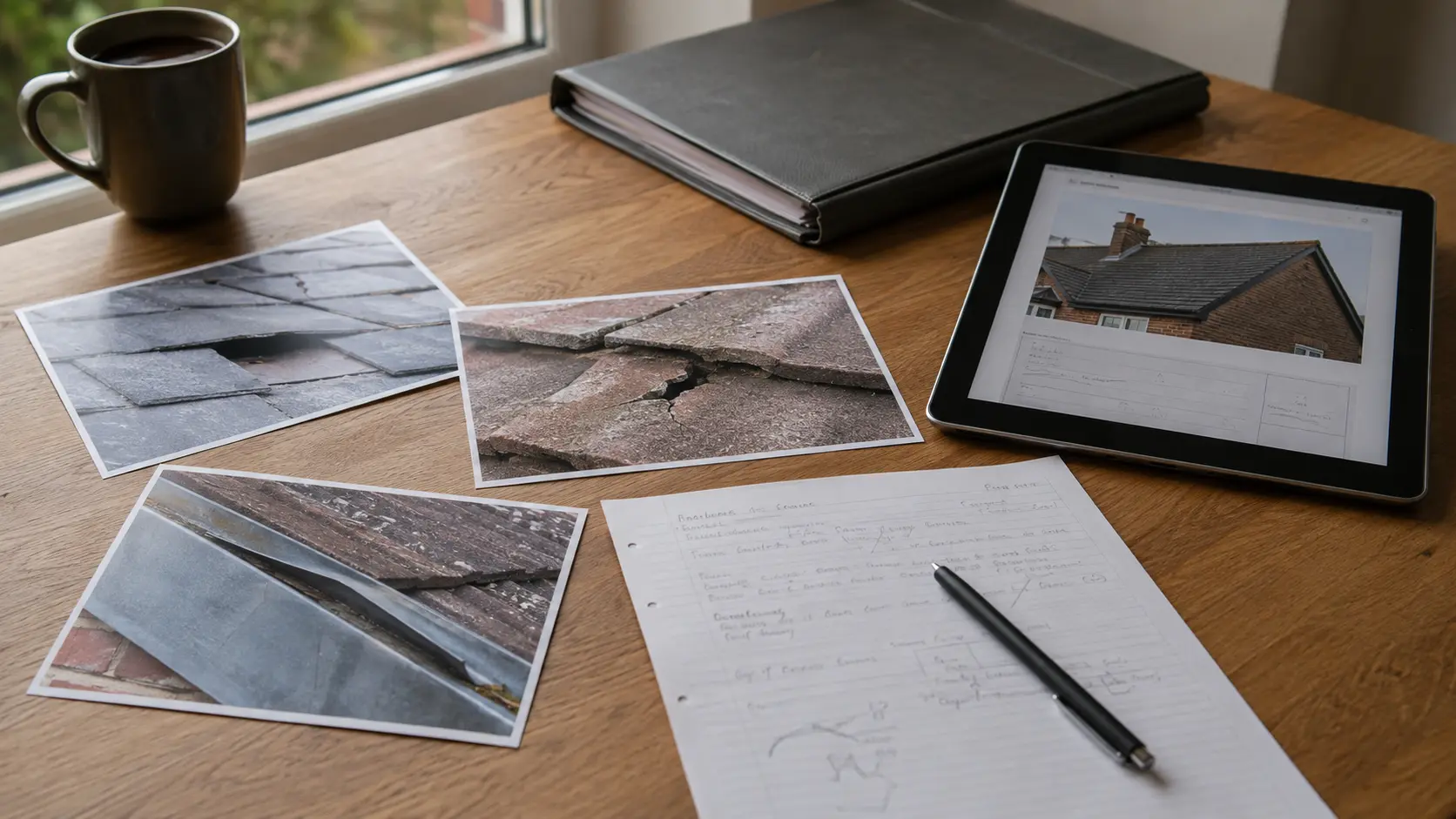
Do not alter photographs or describe assumptions as facts. Useful information separates what was seen from what remains hidden. Keep copies of messages, reports, quotes and receipts together.
Policies and claim procedures differ. The insurer may want notification before permanent work, a particular report format, several quotes or information that emergency action was reasonable. Ask who can authorise work and whether an excess applies.
Storm damage and gradual wear and damage may be treated differently. A roofing inspection can record visible condition, but it cannot promise that an insurer will accept the cause or pay the claim.
A useful document identifies the inspected area, visible problems, access limits, recommended repair and any assumptions about hidden damage. Photographs should have plain captions and should not be labelled with an unverified cause.
If opening the roof exposes wet sarking, underlay or timbers, ask how the change will be recorded and agreed. Keep the final invoice and photographs of completed work in case the insurer requests them.
Preparing for a useful roof check
Give the roofer the property type, town or postcode, the first sign you noticed and when it happens. Mention previous repairs, roof windows, solar panels, chimneys, extensions and anything that may make the roof hard to reach. Photographs taken safely from the ground or inside can help with the first conversation, but they cannot show every layer or confirm the full price.
A good roof check makes clear what can and cannot be seen. Ask which parts of the roof were checked, whether any areas could not be seen and what may only become clear when work begins. This helps the quote clearly explain what is included.
Questions worth asking before you approve work
What information does my insurer require before work starts?
Is temporary weather protection approved?
Does the report distinguish visible facts from possible causes?
What is included and excluded from the roofing quote?
How will hidden damage be recorded and agreed?
You should understand the recommended repair, how the roof will be reached and anything the quote does not include. Do not choose on price alone when two quotes cover different work.
How OnPoint RoofCare can help
OnPoint RoofCare checks roofing problems across Motherwell, Lanarkshire, Glasgow and suitable parts of Central Scotland. Tell us what you have noticed and where the property is. We can then explain whether you are likely to need a repair, a maintenance visit or a wider discussion about replacement.
No online guide can find every hidden roof problem. This guide helps you act safely, ask useful questions and understand why the right answer depends on your roof.
Talk to us about storm damage roof repairs
Send the property area and a safe ground-level photograph if you have one. We will review what you have noticed and contact you about the appropriate next step.